


Where Learning Comes to Life
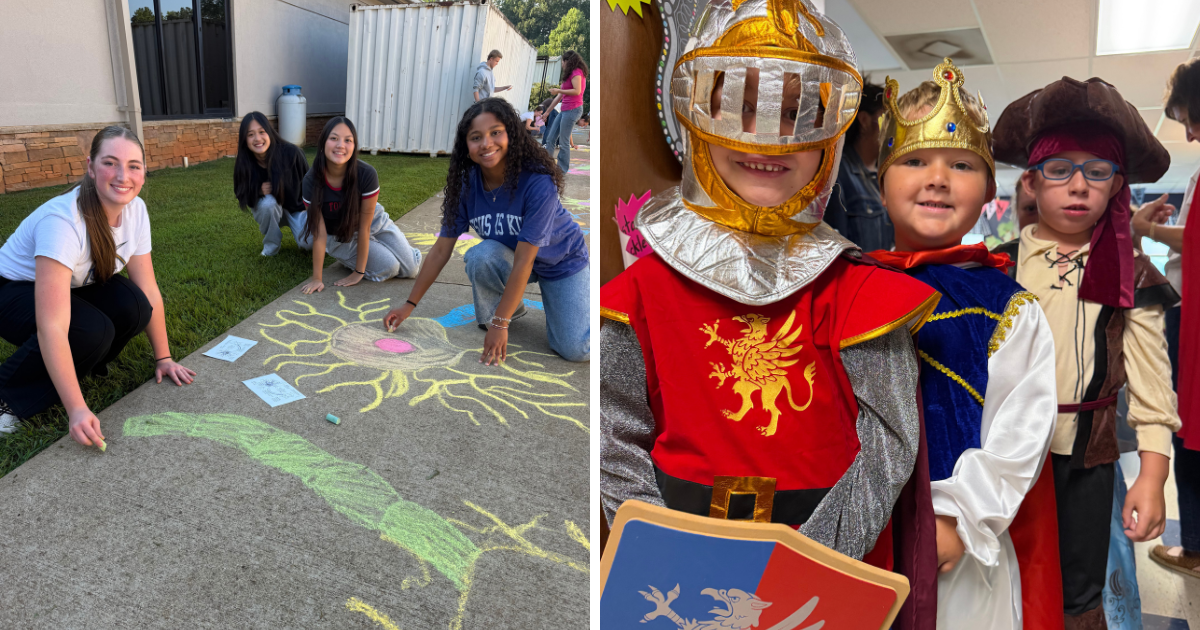
A castle and dragon emerge from a 3D printer. Kindergarteners plant beans and wait for their “beanstalks” to grow. Across campus, AP Psychology students kneel on the sidewalk, chalk in hand, mapping the structures of neurons and the pathways that allow messages to travel through the nervous system.
At first glance, these moments may not seem to have much in common.
But they tell the same story about how students learn at Oakbrook.
From a Kindergartener stepping inside the world of a classic fairy tale to an Upper School student working to understand the complexities of the human brain, students aren’t simply being asked to remember information. They are being challenged to experience it, explore it, make connections, and communicate what they understand.
This is Igniting Minds, an essential part of the Oakbrook Way. It means stoking curiosity, equipping students to think deeply, and ultimately teaching them how to learn.
The content becomes more complex as students grow. The curiosity, engagement, and habits of mind we are building begin from the very start.
Building a Love of Learning from the Beginning
For Oakbrook Kindergarten students, a two-week study of fairy tales becomes much more than reading a collection of familiar stories. Literature becomes the starting point for learning that crosses subjects and invites children to participate in what they are discovering.
Throughout the unit, students encounter classic fairy tales and use narration to retell the stories in their own words. They act out stories and create puppet shows, strengthening comprehension, sequencing, vocabulary, oral communication, and their understanding of characters, settings, problems, and solutions.
Narration also reflects the influence of Charlotte Mason’s educational philosophy in Oakbrook’s approach to early learning. Instead of relying only on worksheets or asking young children to repeat isolated facts, narration requires students to listen attentively, process what they have heard, decide what is important, organize their thoughts, and communicate the story back in their own words.
In other words, even our youngest students are beginning to do something fundamental to learning: take knowledge in, make sense of it, and express their understanding.
And one story can become the launching point for learning across disciplines.
After encountering Jack and the Beanstalk, students planted their own beans and began watching their “beanstalks” grow, connecting literature with observation and science.
Technology entered their fairy-tale world through a 3D-printed castle and dragon, turning familiar elements of the stories into objects students could see and explore.
Art became part of the experience, too. Kindergarteners painted paper plates as they learned about Pierre-Auguste Renoir’s early work painting porcelain, introducing young students to an artist and giving them an opportunity to create something inspired by what they had learned.
Literature. Language. Science. Art. Technology. Imagination.
Instead of experiencing these as completely separate subjects, students begin discovering how learning connects.
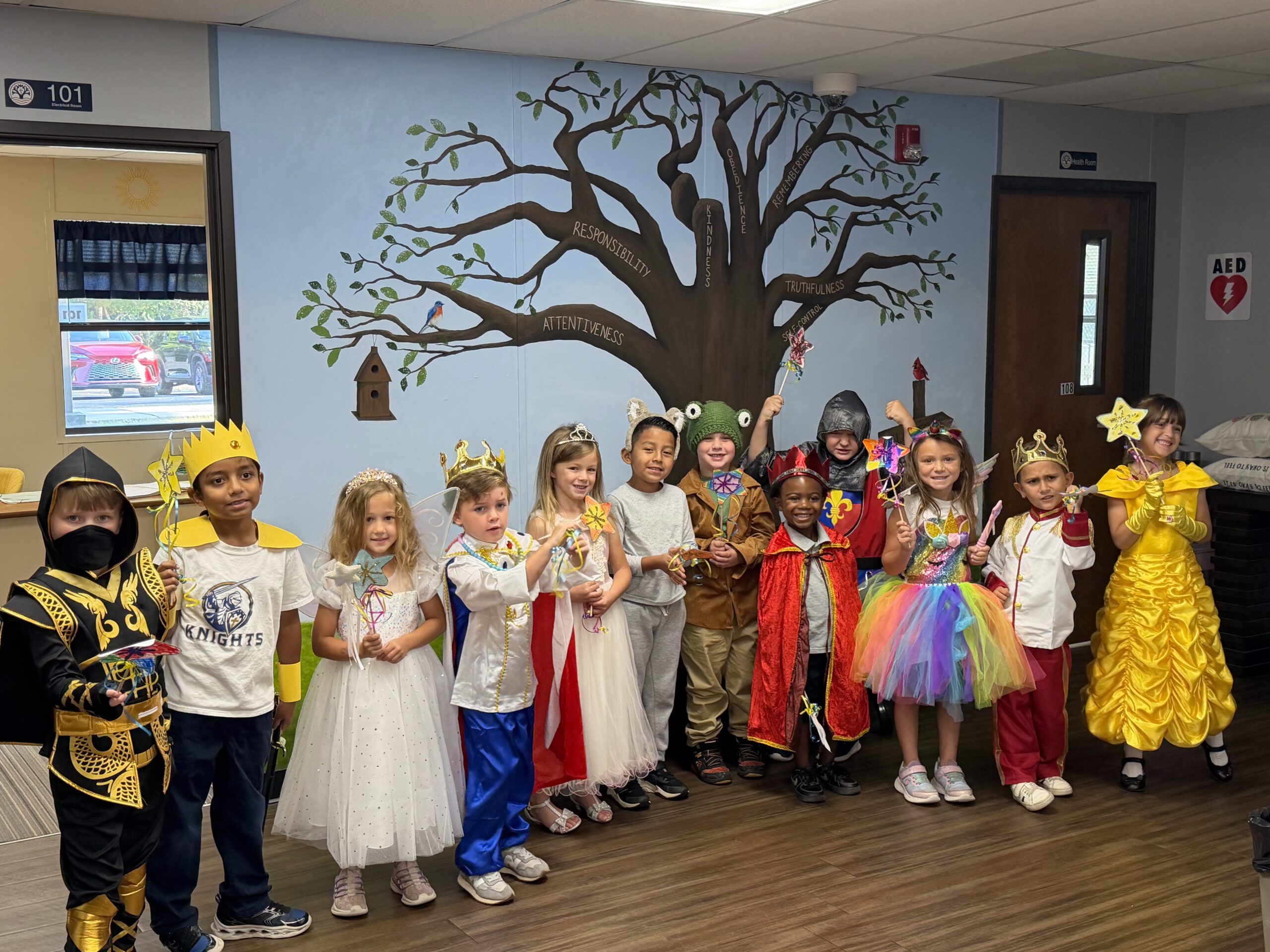
The two-week study culminates with Fairy Tale Day, when students dress as their favorite fairy-tale characters and write about their choices. What looks from the outside like a wonderfully fun day of costumes is actually a celebration of meaningful learning—and another opportunity for students to connect reading, writing, imagination, and self-expression.
Along the way, they are also discovering something we hope stays with them long after Kindergarten:
Books can open the door to an entire world of discovery.
From Fairy Tales to Neuroscience
Years later, that same philosophy of active learning can be seen in AP Psychology.
The subject matter, of course, has become considerably more complex.
As part of their study of the biological bases of behavior, AP Psychology students explore how the brain and nervous system contribute to behavior and mental processes. That includes understanding neurons—the specialized cells that receive and transmit information throughout the nervous system.
Students aren’t simply learning the names of structures on a diagram. They are working toward understanding how the system functions.
That means examining the different parts of a neuron and the role each plays in communication: how dendrites receive signals, how information moves through the cell body and along the axon, and how axon terminals participate in transmitting messages to other cells.
Their study also introduces the communication that occurs between neurons at the synapse, including the role of neurotransmitters—chemical messengers that can influence behavior and mental processes.
These are processes students cannot see happening simply by looking at the human body. They have to create a mental model of something microscopic, interconnected, and constantly in motion.
So their teacher gave them a much larger canvas.
The sidewalk.
Working with chalk, students created oversized models of neurons, carefully drawing and labeling their structures while applying what they had been learning about how those structures work together.
The drawing itself wasn’t the objective.
Understanding the system was.
To create an accurate representation, students had to retrieve what they had learned, determine which structures were essential, place them in the correct relationship to one another, label them appropriately, and connect those individual parts to the larger process of neural communication.
They were taking an abstract concept and making it visible.
And as they worked alongside one another, students could discuss their models, compare their thinking, identify missing or misplaced components, and refine their understanding.
That process requires a deeper level of thinking than simply recognizing a labeled neuron on a worksheet or memorizing vocabulary for a test. Students move from “What is this part called?” toward the more important question: “What does it do, and how does it work with everything else?”
That distinction is important in AP Psychology. Students are expected not only to acquire psychological knowledge but to apply concepts, analyze information, interpret evidence, and use what they know to explain behavior and mental processes.
The sidewalk models become one step in building the conceptual foundation students will need to do that higher-level work.
And because the lesson moved outside, their thinking became visible beyond their classroom. Students, teachers, and families walking across campus encountered giant neurons along their path—a glimpse into what Oakbrook students were learning that day.

Learning How to Learn
A Kindergartener retelling Jack and the Beanstalk and an AP Psychology student explaining neural communication may seem worlds apart.
But look a little closer.
The Kindergartener listens, processes information, identifies what matters, makes connections, and communicates understanding.
The AP student encounters a complex scientific concept, processes information, identifies what matters, makes connections, and communicates understanding.
The complexity changes. The habit of mind does not.
That is an important part of the Oakbrook Way.
We want students to be active participants in their education—asking questions, making connections, communicating ideas, solving problems, collaborating with others, and developing the confidence to explore something they don’t yet understand.
As students grow, those opportunities grow with them—from narration, imaginative play, and hands-on discovery in our youngest classrooms to interdisciplinary experiences, the arts, electives, AP coursework, and college-level learning in the Upper School.
Small classes give teachers the opportunity to know their students, encourage meaningful discussion, ask deeper questions, and create experiences that move students beyond simply receiving information.
And throughout that journey, students are challenged to think critically while learning to view knowledge and the world around them through the lens of biblical wisdom.
“As an Admissions Director, one of the things I love most is showing families that the Oakbrook Way isn’t simply something we say—it is something you can see happening across our campus. From a Kindergartener discovering the wonder of a great story to an AP student exploring neuroscience on the sidewalk, our students are learning to ask questions, make connections, and become active participants in their education. We aren’t preparing them just for the next test or the next grade. We are helping them learn how to learn.”
— Amanda Ledbetter, Director of Advancement & Admissions
Ultimately, Igniting Minds is about developing students who are intellectually curious, capable of critical thinking, collaborative, creative, and increasingly self-directed—students prepared to carry those habits into college, their careers, and wherever God calls them to lead and serve.
Because at Oakbrook, learning isn’t limited to a textbook, a desk, or even a classroom.
It comes to life.
SEARCHING FOR THE RIGHT SCHOOL FOR YOUR FAMILY?
